
Wat Pha Lat, The Temple of the Sloping Cliff

Chiang Mai a la Carte
Table of Contents
The Remarkable Revival of a Forgotten Temple
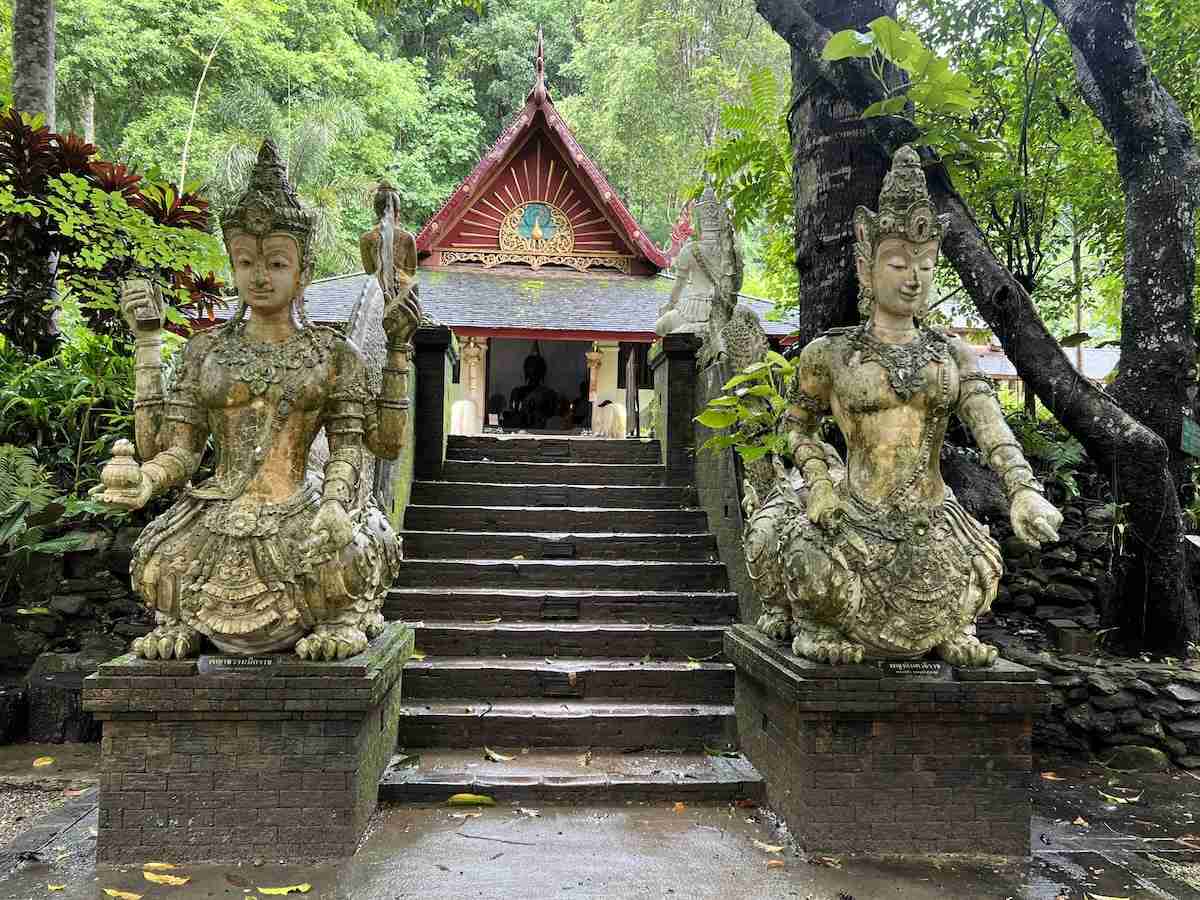
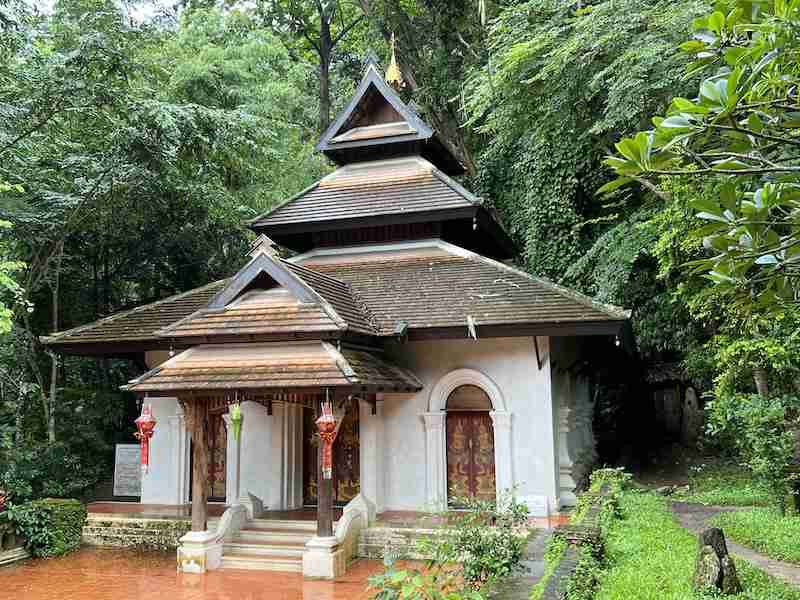
Wat Pha Lat (วัดผาลาด) is a beautiful Buddhist temple on the slopes of Doi Suthep, the mountain overlooking Chiang Mai. The temple’s name translates as “the monastery of the sloping cliff“—Pha (ผา) means “cliff,” and Lat (ลาด) means “slope.” For decades, Wat Pha Lat was a ruined, abandoned temple but has experienced a remarkable revival over the past ten years. The Fine Arts Department of Chiang Mai has restored and rebuilt several structures, and the temple has added new buildings as well. In 2017, a journalist from Chiang Mai City Life labeled the temple “a hidden gem,” but that is no longer the case. Wat Pha Lat is still a gem but has become a major tourist attraction on Doi Suthep, second only to Wat Phra That Doi Suthep.
Introduction to the Temple of the Sloping Cliff
Wat Pha Lat is also known as Wat Skathakhami (วัดสกทาคามี). This probably refers to Sakadagami, which is the second stage of the four stages of enlightenment in Buddhism. Several sources claim the temple is more than 650 years old, but I have not found any evidence of this. The Chiang Mai Chronicle tells the legend of the foundation of Wat Phra That Doi Suthep in 1383, during the reign of King Kue Na (1355/1367–1385/1388), the sixth king of the Mangrai dynasty. King Kue Na was a very devout Buddhist, and it is plausible that a temple or structure was also established at this location. As far as I know, none of the structures at Wat Pha Lat are older than approximately 150 years.
Who Constructed Wat Pha Lat?
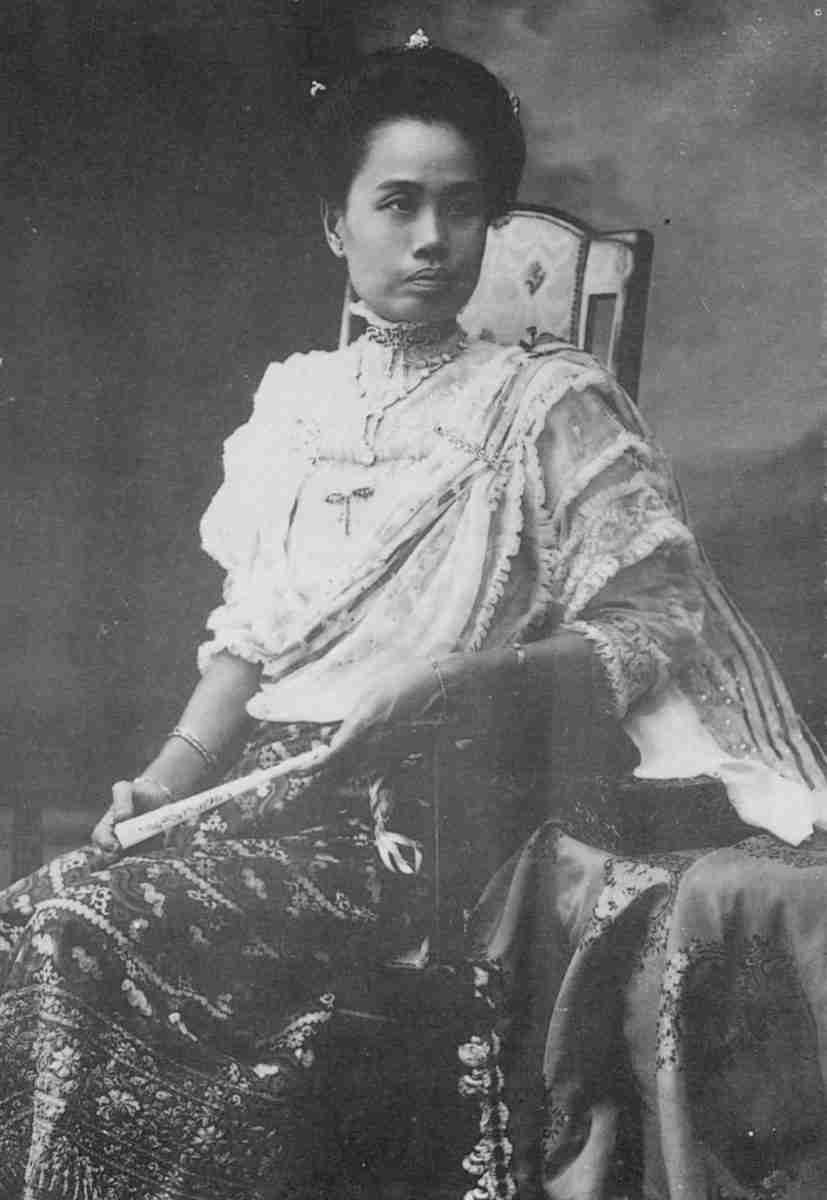
During a visit a couple of years ago, I spoke with Phra Khru Thirasuttapoj (Phra Maha Sa-ng Theerasangwaro), the abbot of Wat Pha Lat. He told us that Chao Kaew Nawarat, the last ruler of Chiang Mai, and Princess Dara Rasmi (the princess consort of King Chulalongkorn, Rama V), were involved in the construction of the temple. He confirmed that Mong Panyo, the Burmese teak trader, hired Shan craftsmen from Burma for the construction. At the Wat Ket Museum (now closed and under restoration) at Wat Ket Karaam, I also found information linking Mong Panyo as a major contributor to the construction of Wat Pha Lat. Mong Panyo was responsible for the restoration and construction of many Buddhist temples and buildings in Northern Thailand.
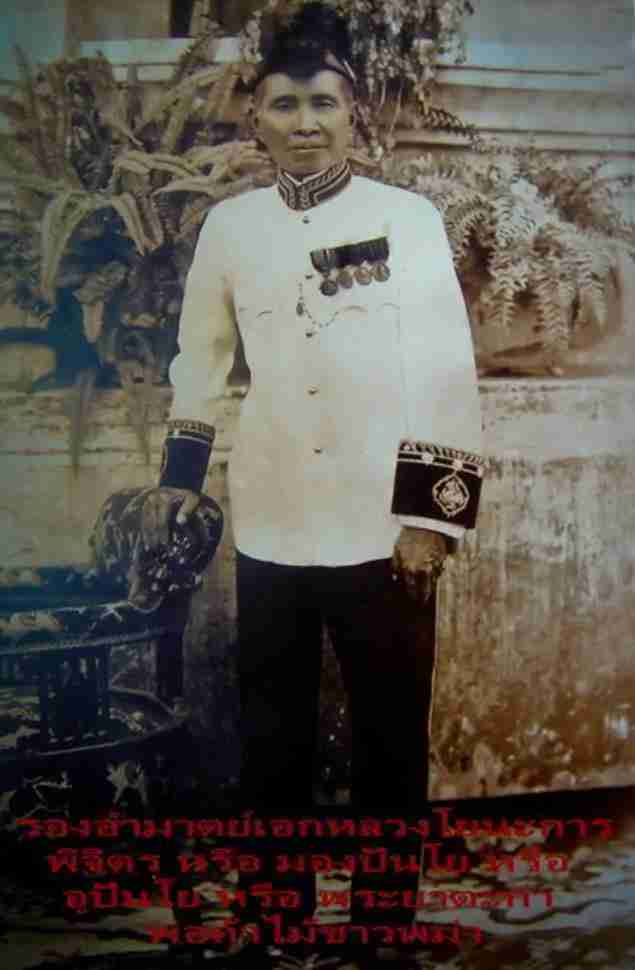
Who was Mong Panyo?(aka U Panyo), known as “Phaya Taka”
Mong Panyo (1845–1927) was a Burmese man from the town of Moulmein, who probably first came to Chiang Mai around 1870 on the expedition of Holt Samuel Hallett. He returned to Chiang Mai and worked as a teak trader or forester for the Borneo Company. He was also known a U Panyo or “Phaya Taka”. Mong Panyo was a devout Buddhist and became a very influential person in Chiang Mai. He earned immense credit by restoring and constructing numerous Buddhist temples in Chiang Mai, Lampang, Viang Pa Pao, and even as far as Uttaradit.
In doing so, he must have been close to the monk-engineer Kruba Srivichai and certainly maintained good relations with the ruling family of Chiang Mai. King Rama V bestowed upon him the title of Deputy Chief Minister Luang Yonakarn Phichit (รองอำมาตย์เอกหลวงโยนะการพิจิตร)in recognition of his services to the Chiang Mai community. Following this, he became known as Luang Yo. Later, the King granted him the family name Upayokin. Luang Yo’s former residence, Baan Hueang Luang, on Charoenprathet Road in Chiang Mai now operates as a restaurant named “Panyo.”
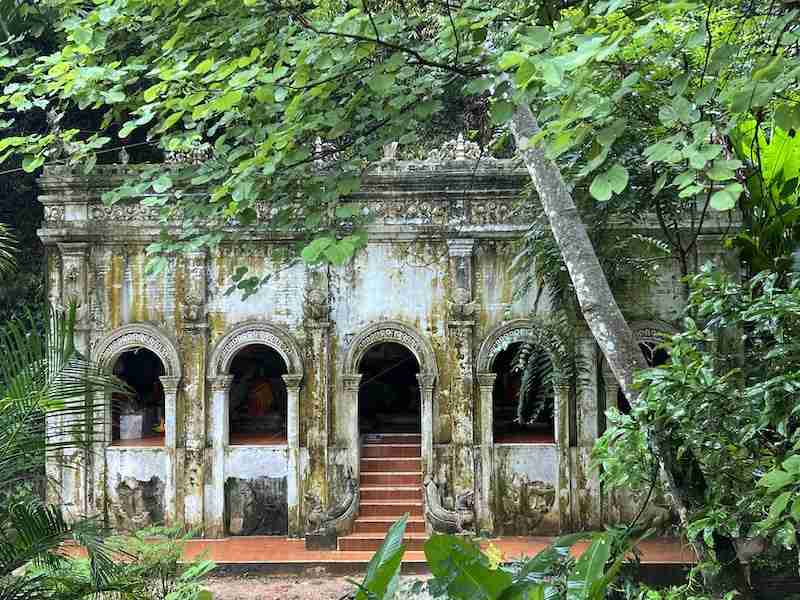
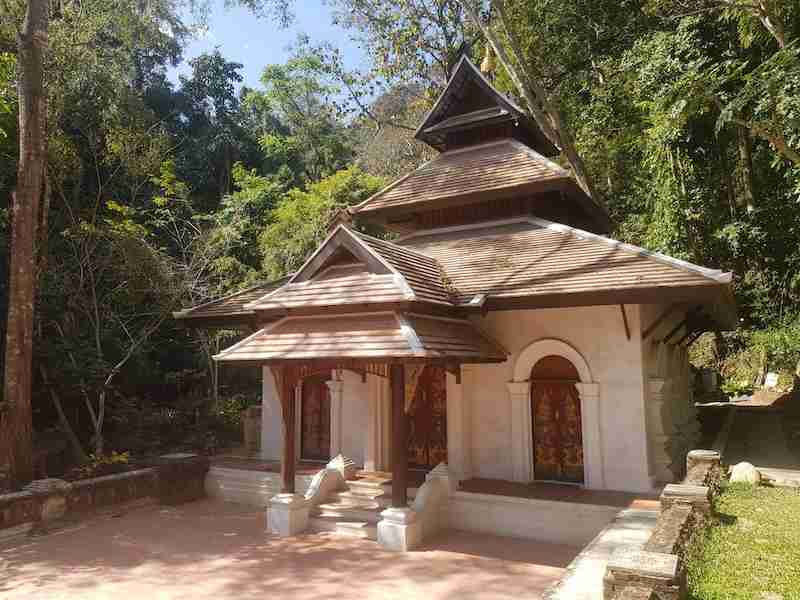
Mong Panyo likely employed a team of skilled Burmese and Shan craftsmen who worked on numerous temples and structures in Chiang Mai and other places in the North. Notable examples include Wat Phra Singh and Wat Sri Don Chai in Chiang Mai, Wat Hariphunchai in Lamphun, and Wat Si Sutthawat in Wiang Pa Pao. This list is extensive. It is believed that these artisans constructed the Ho Phra Chao Rim Nam Tok, most likely between 1886 and 1898. The same group is also credited with constructing the water well, the Bagan-style chedi and the viharn, the assembly hall.
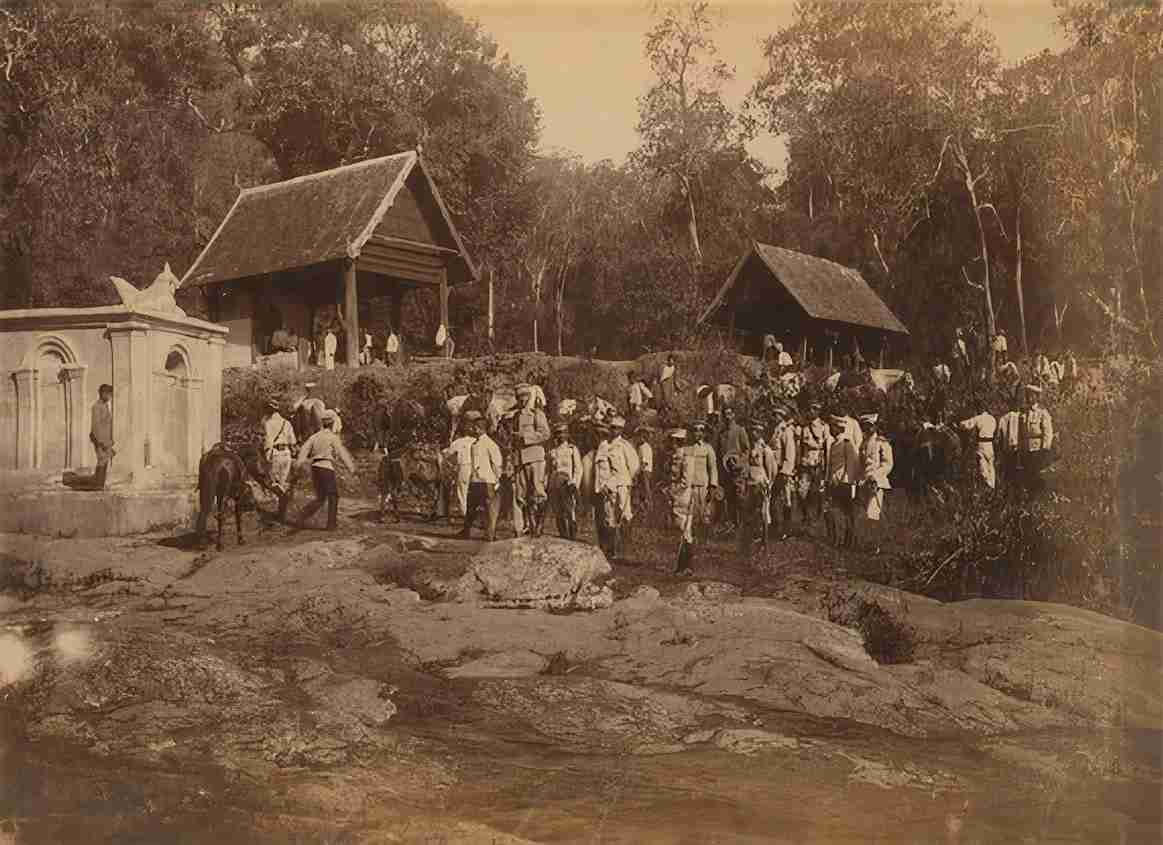
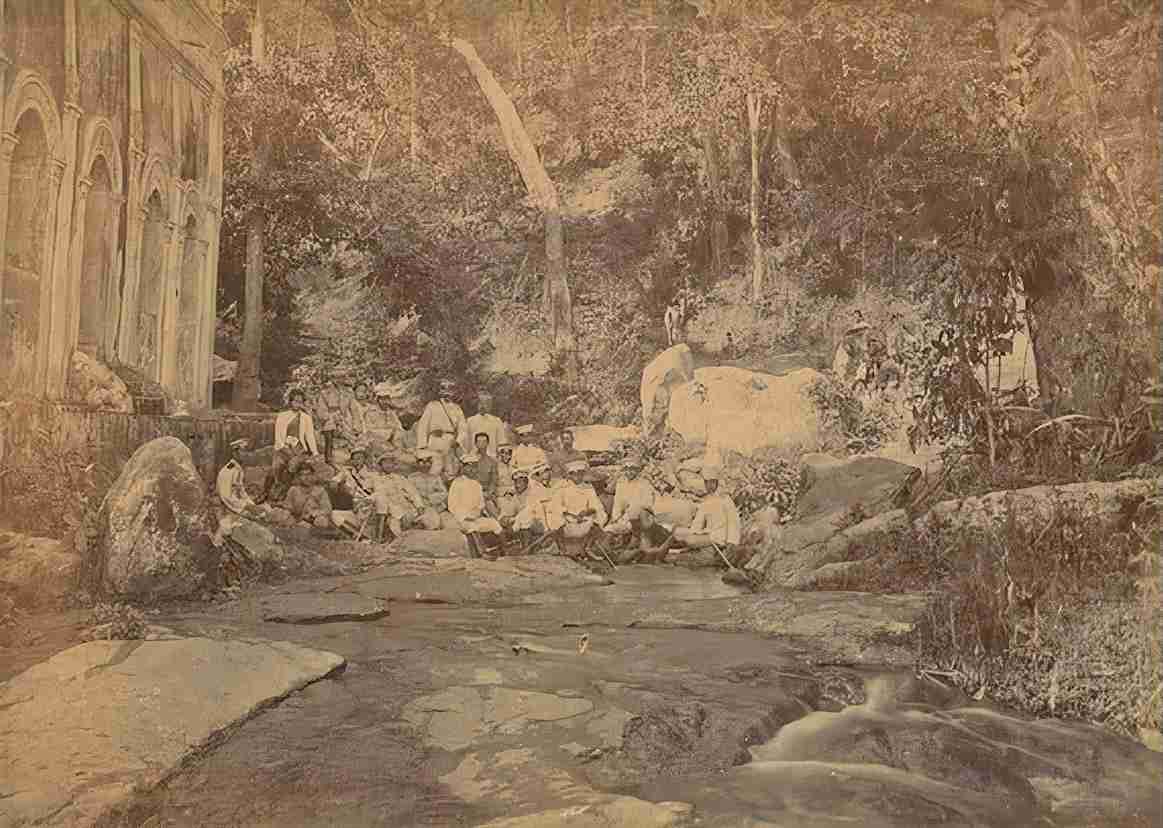
The First Photographs of Wat Pha Lat
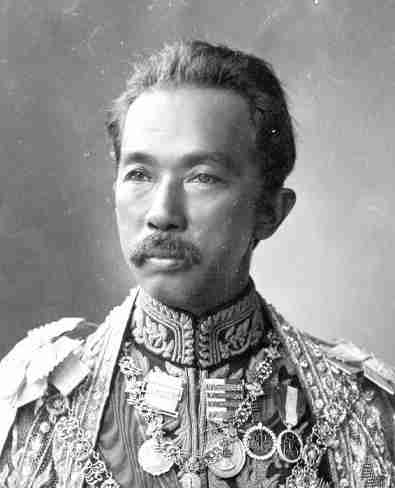
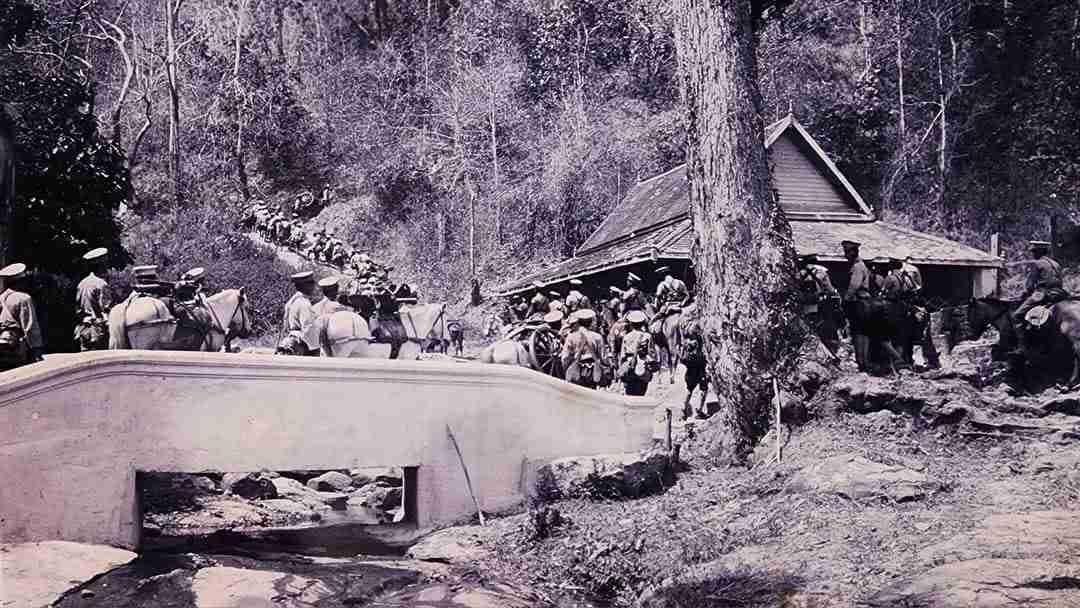
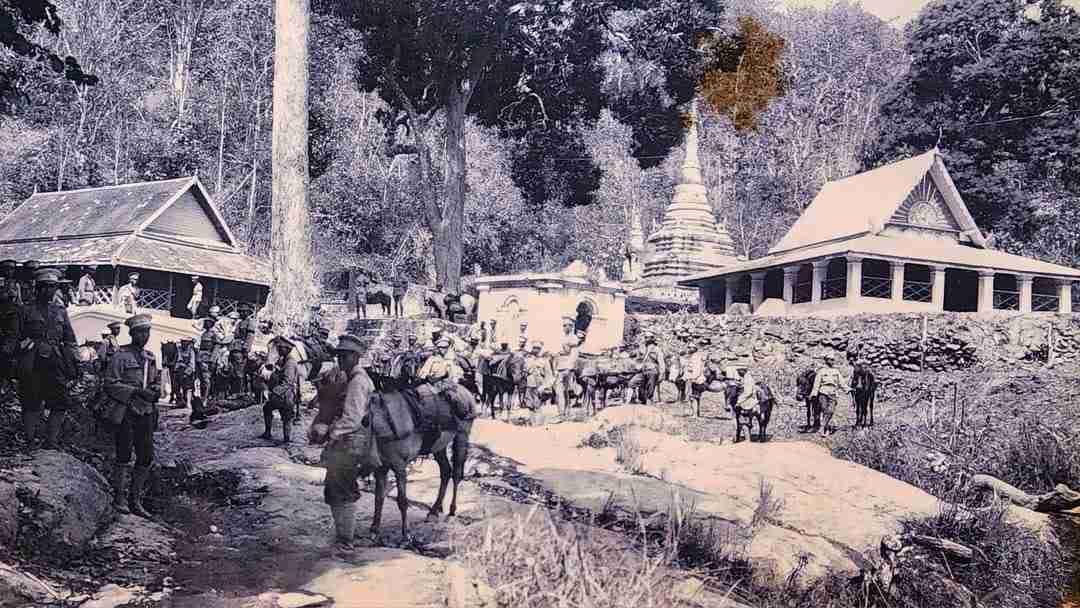
These two photographs are likely the oldest known images of Wat Pha Lat. They were taken during the official inspection tour of Prince Damrong Rajanubhab, Minister of the Interior, who visited Chiang Mai between October 22, 1898, and January 14, 1899. Prince Damrong, regarded as the founder of modern Thai education, also played a key role in reforming the country’s provincial administration.
At the time of his visit, the Ho Phra Chao Rim Nam Tok and the water well had already been completed. Two other early structures would later be replaced by an assembly hall and a meditation hall. The pagoda, however, appears to have been constructed sometime after the prince’s journey. In the second photograph, the man in the dark suit standing among soldiers may very well be Prince Damrong himself.
The visit of Prince Bhanurangsi Savangwongse in 1916
In December 1916 Prince Bhanurangsi Savangwongse visited Wat Pha Lat, Wat Phra That Doi Suthep and Mon Jok Pok Palace, the summer residence of Princess Dara Rasmi, and her rose Garden. He was one of the younger brothers of King Chulalongkorn (Rama ) and held several posts in the government. He is known as the founder of the Thai Postal Service but was the Inspector General of the Armed Forces when troops of Monthon Phayap escorted him to Doi Suthep in December 1916. There are several excellent photos of this visit. Below are two of them.
King Rama VII Visits Wat Pha Lat
King Prajadhipok, Rama VII, was the first king of the Chakri dynasty to visit Chiang Mai, from January 22 until February 5, 1927 (1926, according to the old Thai calendar in which April 1 was New Years Day) . The King and Queen Rambai Barni also visited Wat Pha Lat on Doi Suthep. Footage of this visit starts at 2:41:23 in this film, which lasts more than four hours. In the video, the bridges are visible as well as the assembly hall, the Ho Phra Chao Rim Nam Tok, the water well, and the chedi.
According to a source the King and Queen also visited the elderly Luang Yonakarn Phichit (Mong Panyo) to thank him for the wonderful reception in Chiang Mai. Luang Yonakarn Phichit passed away the same year.
Ho Prachao Rim Nam Tok, the House of Buddha images on the waterfall
A Unique Building
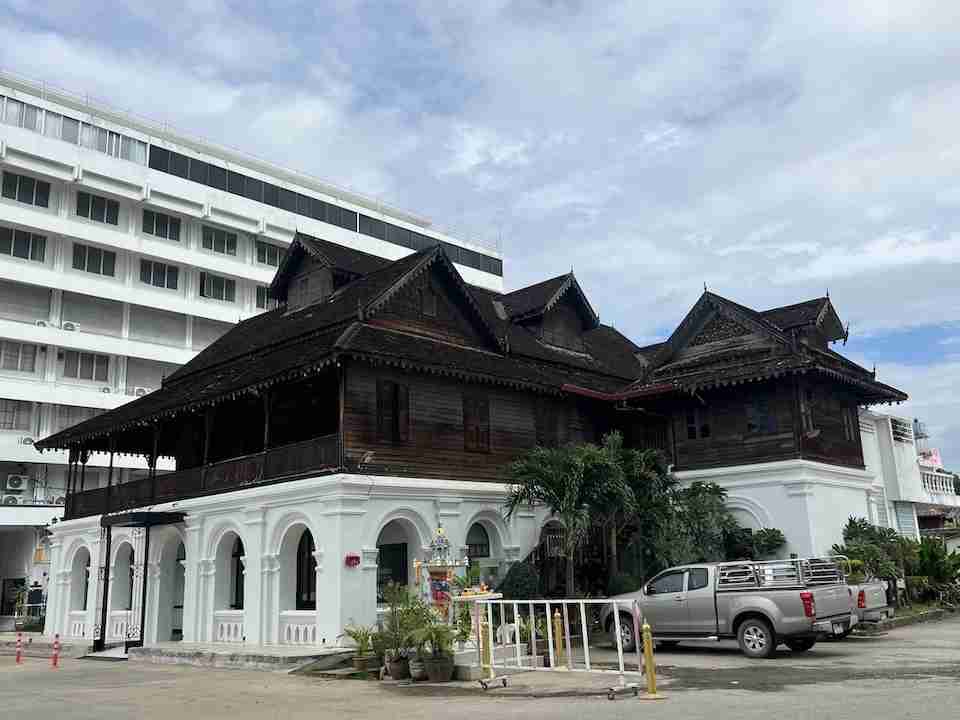
The Ho Phra Chao Rim Nam Tok (Thai: หอพระเจ้าริมน้ำ), or “House of the Buddha Images by the Waterfall” is the most striking and fascinating structure at Wat Pha Lat. “Ho” means “house”, “Phra Chao” refers to the Buddha images, and “rim nam tok” means “by the waterfall” (rim nam tok). It is a unique building unlike any others I have seen in Southeast Asia. Experts classify the building as “Burmese Colonial Style”, a blend of Burmese and Western architectural design.
Stunning Pictures of Elephants at Wat Pha Lat
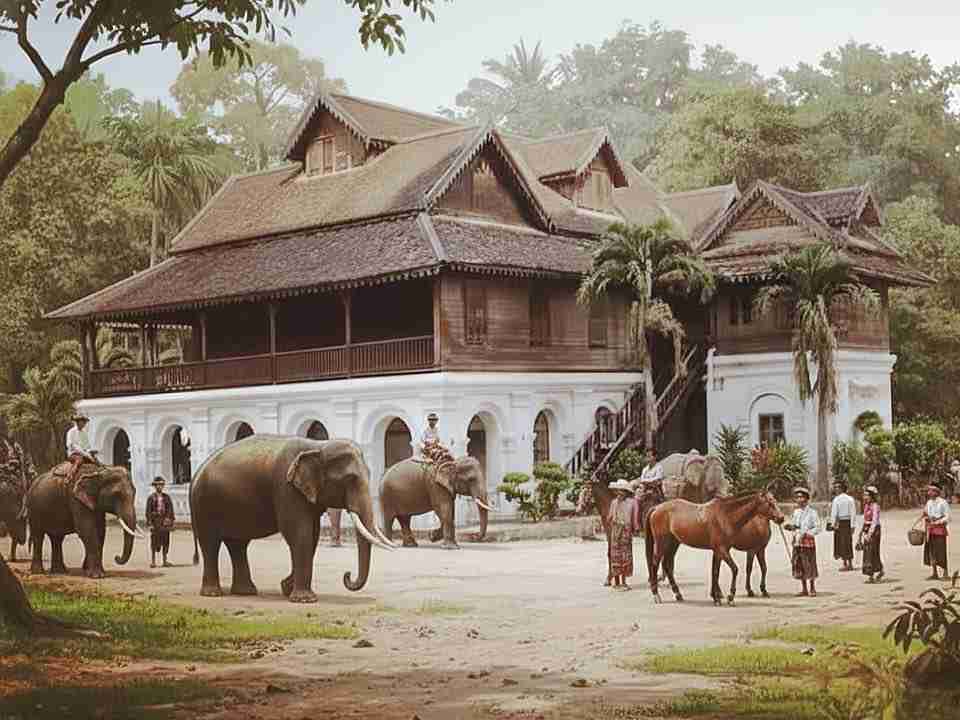
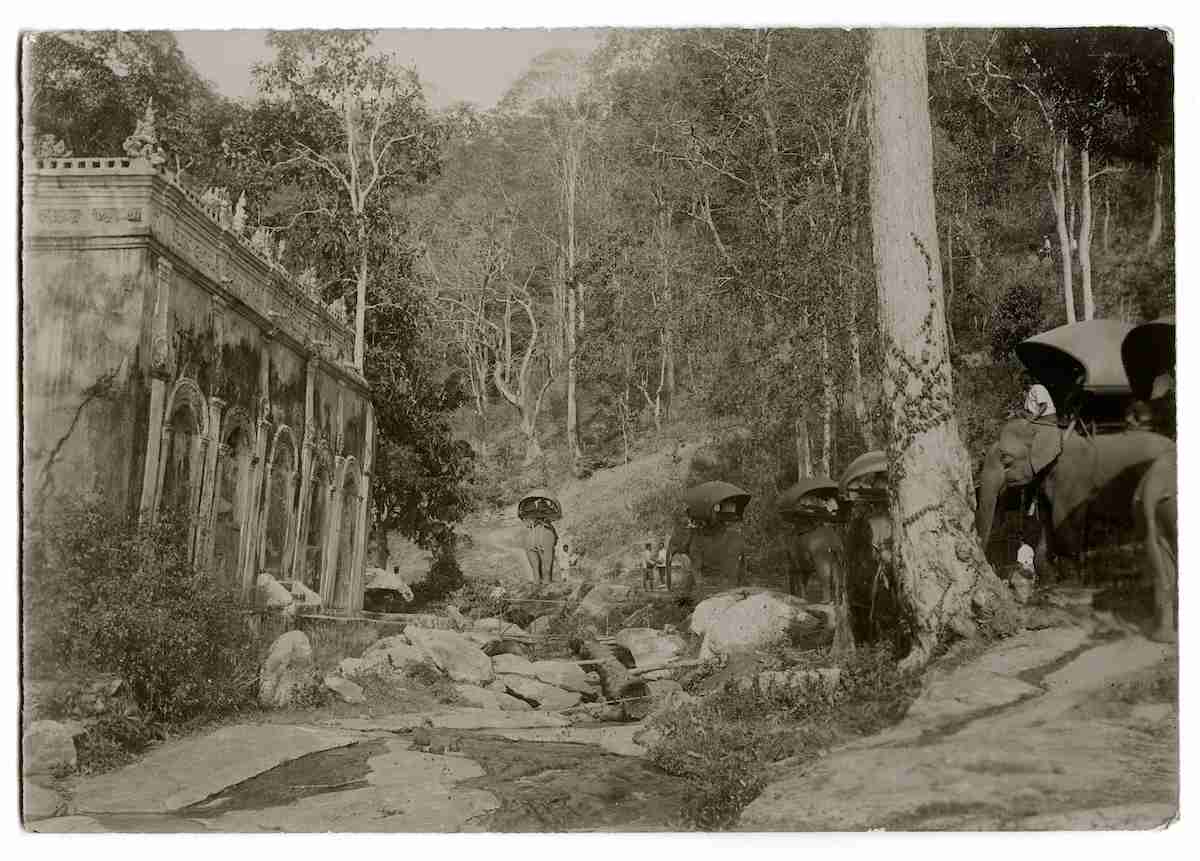
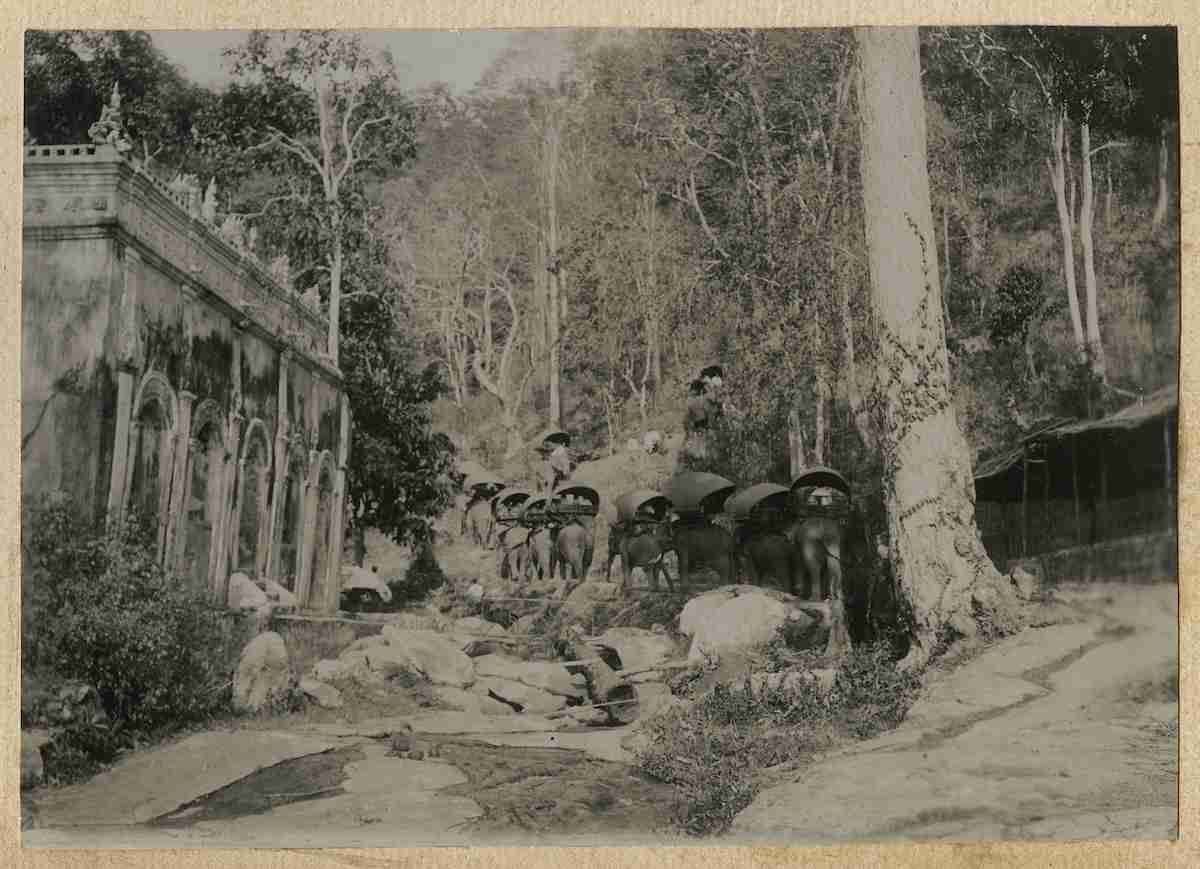
Sarah Ainslie and Maryanne Stanislaw kindly shared these stunning, previously unpublished photos of Wat Pha Lat from the personal album of their relative, C.B. Ainslie, who worked for the Borneo Company. These elephants likely belonged to the company and were probably used to carry the entourage of Princess Dara Rasmi during a visit to Doi Suthep. The Princess was the daughter of King Inthawichayanon and Queen Thip Keson of Chiang Mai, and one of the consorts of King Chulalongkorn (Rama V) of Siam.
Historical records indicate she returned to her hometown of Chiang Mai from Bangkok in April 1909 and departed again in November. During this period, she visited Wat Pha Lat and other sites on Doi Suthep. It is probable that a professional photographer captured these fantastic images.


The Demise and Reconstruction of the House of Buddha Images
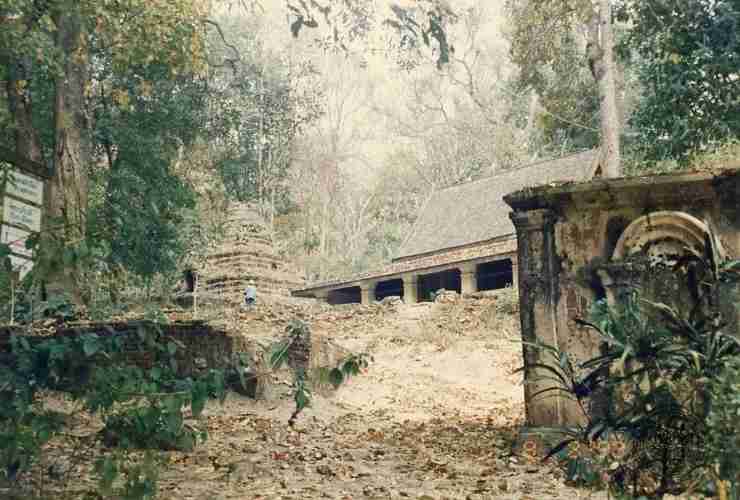
In 1935, followers of the revered monk Kruba Srivichai completed the construction of the road to Wat Phra That Doi Suthep. This development likely reduced the number of pilgrims using the old trail that passed through Wat Pha Lat. Over time, a lack of funding and the forces of nature led to the deterioration of the temple structures. When officials from the Fine Arts Department visited in 1993, they found the temple in ruins. The pagoda showed the same damage that was visible in the footage of the royal visit in 1927. The Ho Phra Chao Rim Nam Tok had completely collapsed, leaving the Buddha images exposed to the elements as is visible on below pictures.
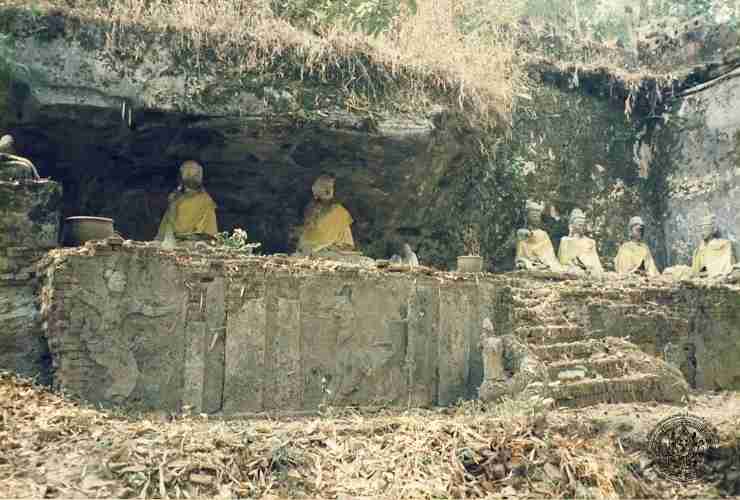
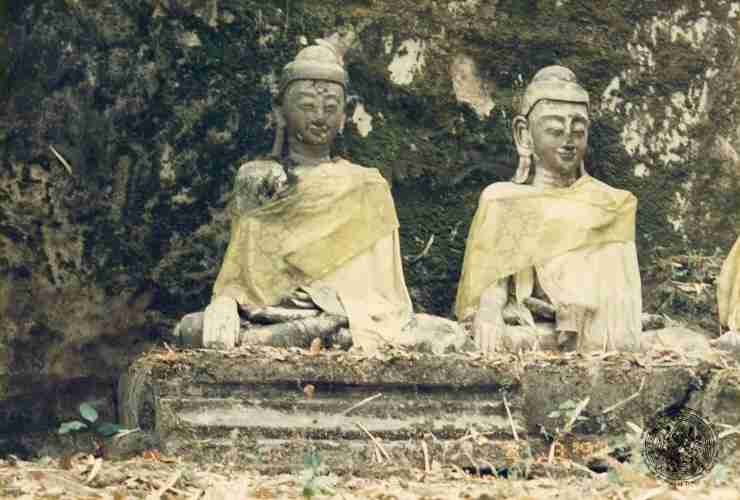
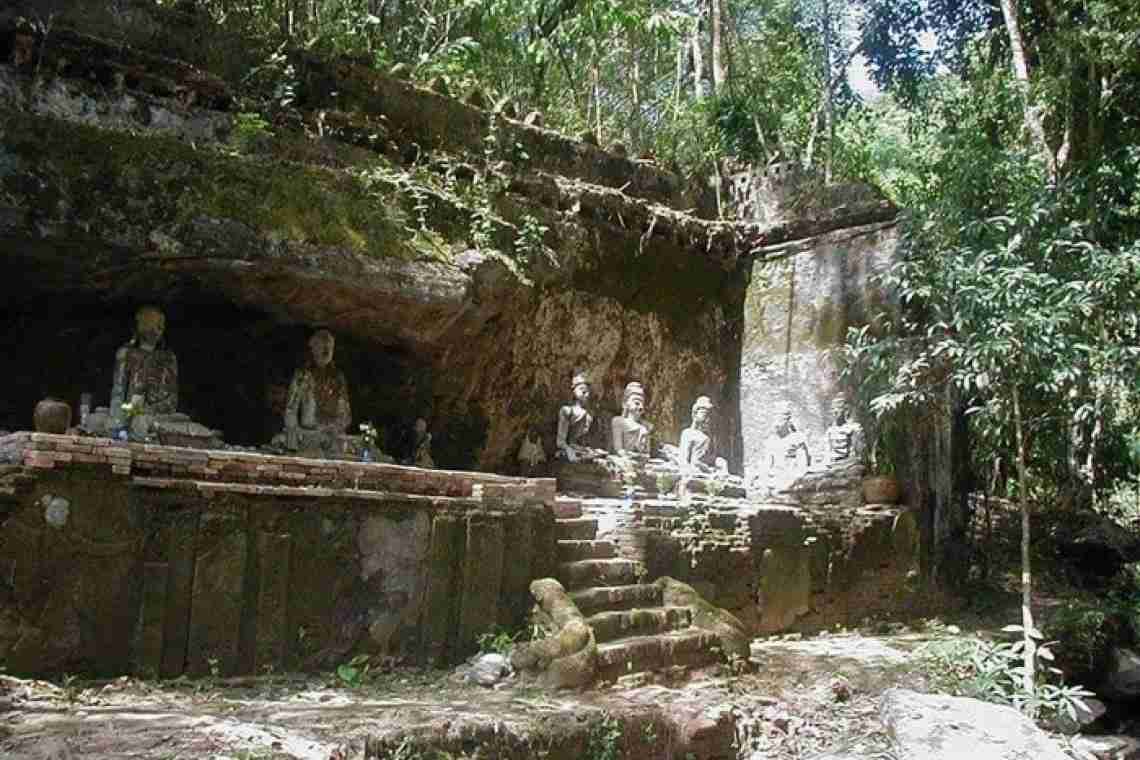
The reconstruction of Ho Phra Chao Rim Nam
Staff of the Fine Arts Department visited the temple in 2016 to make plans for the reconstruction of the Ho Phra Chao Rim Nam. The departement decided then to reconstruct the original building, using old photographs. An article from Kreangkrai Kirdsiri and Isarachai Buranaut tells the story of the reconstruction. The article is in the Thai language and you can find the title in the references section below.
According to the abbot, the budget of this reconstruction was 12 million Thai Baht, less than 400000 USD. This covered the reconstruction of the Ho Phra Chao Rim Nam Tok as well as some restoration to the bridge, the viharn, and the chedi. I will verify this. Below are pictures that were taken of the Ho Phra Chao Rim Nam Tok over time. Reconstruction finished in 2019, which was a remarkable and laudable achievement.
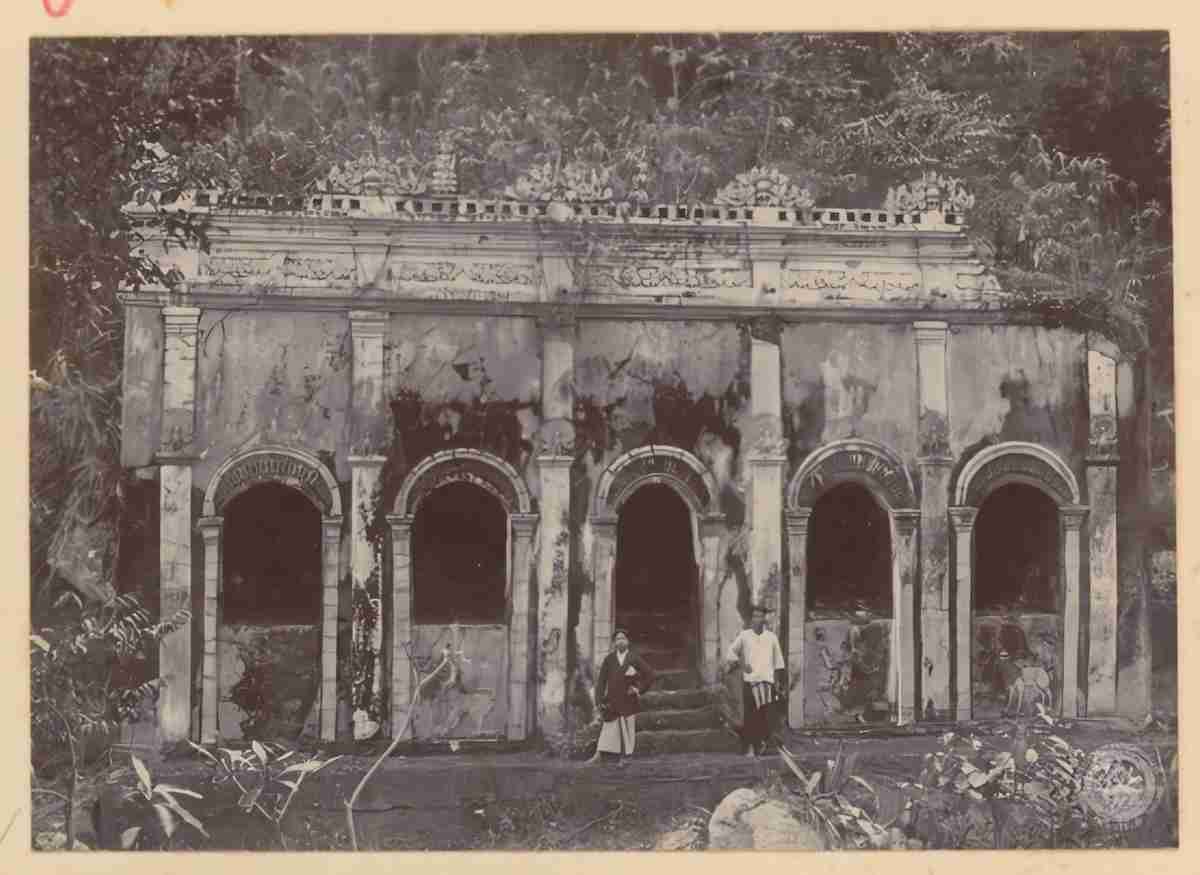
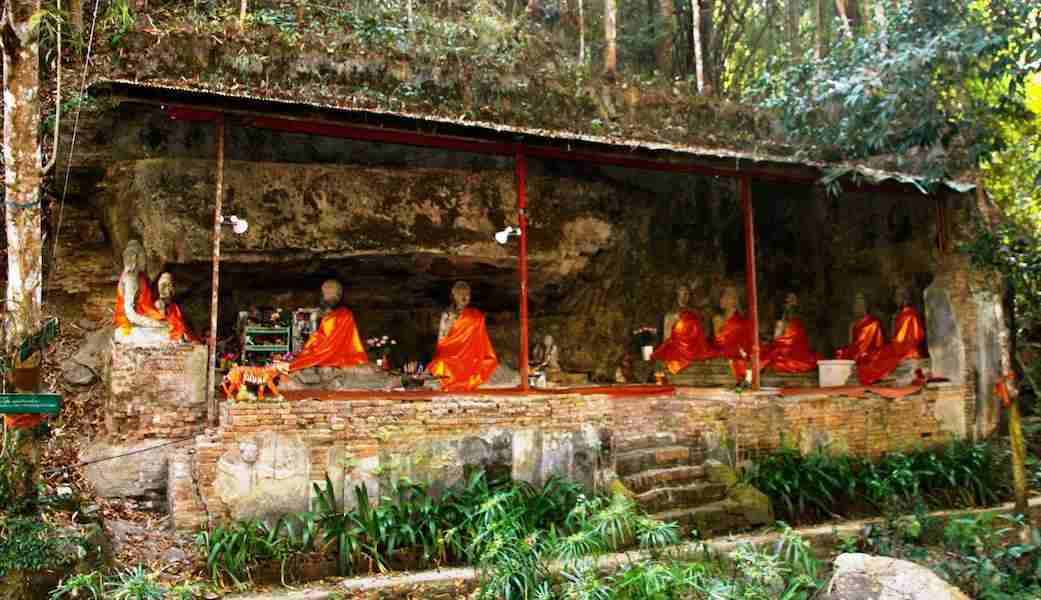

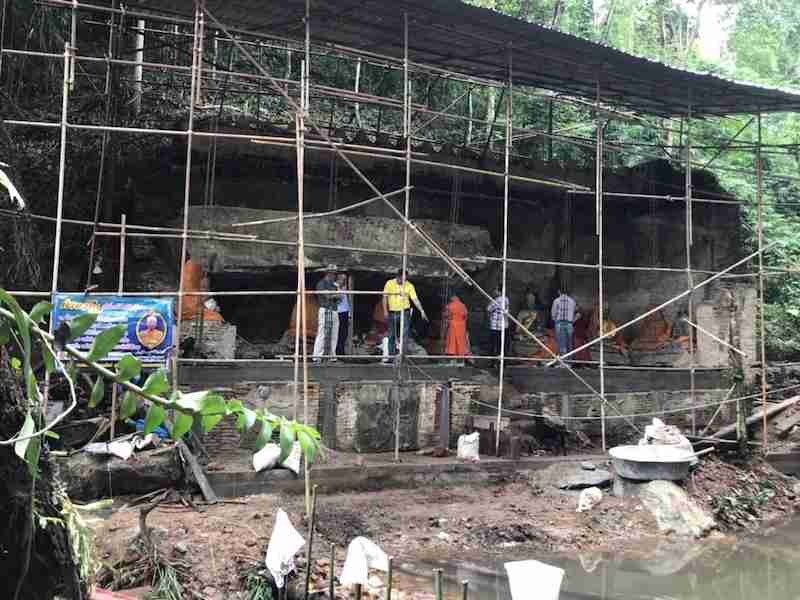
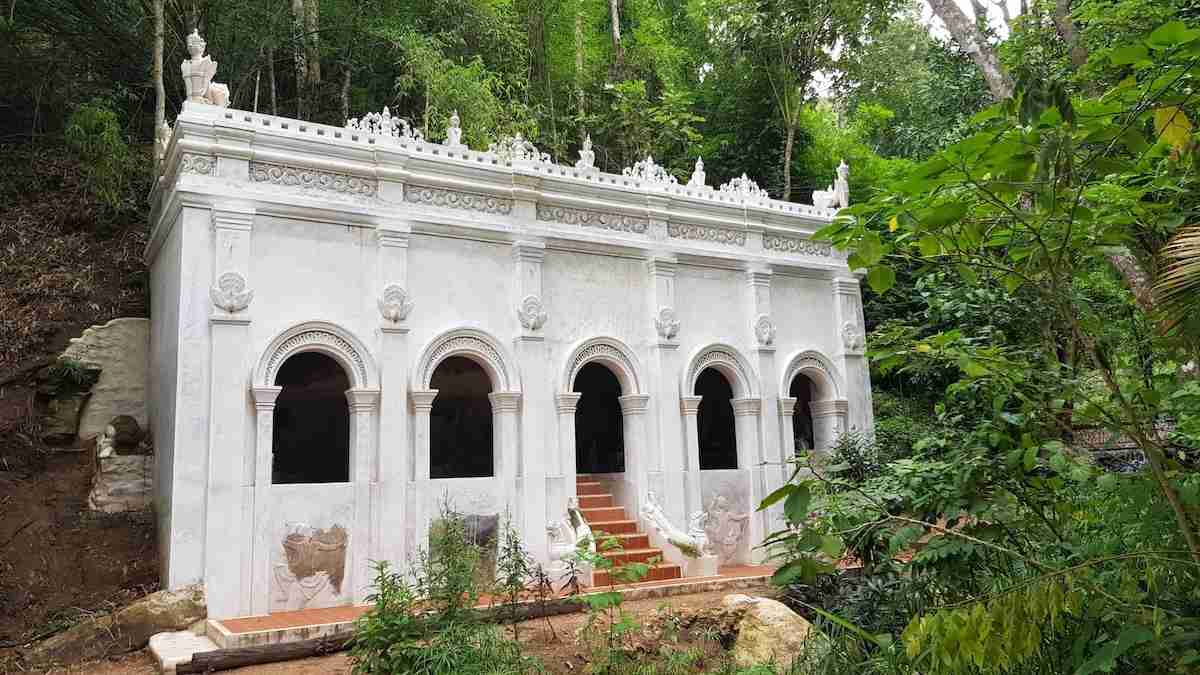
Below pictures of the Ho Prachao Rim Nam Tok were taken in 2025.
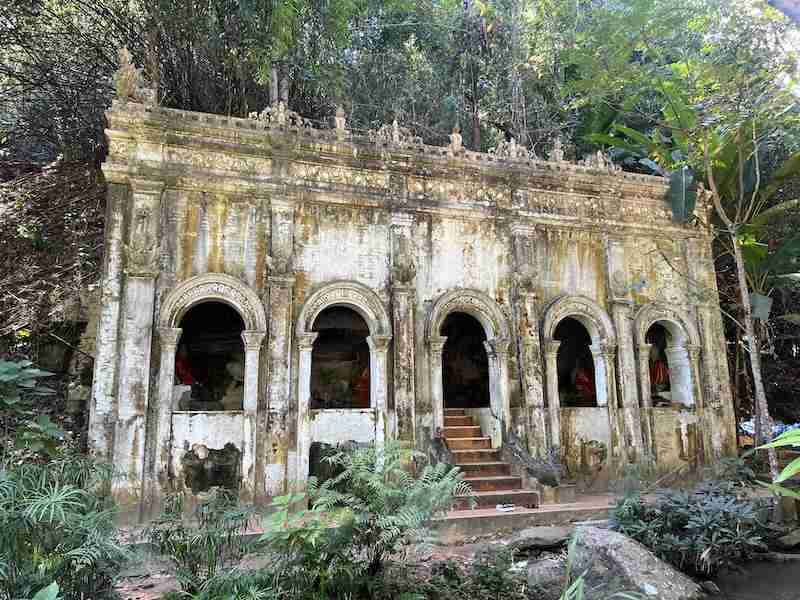
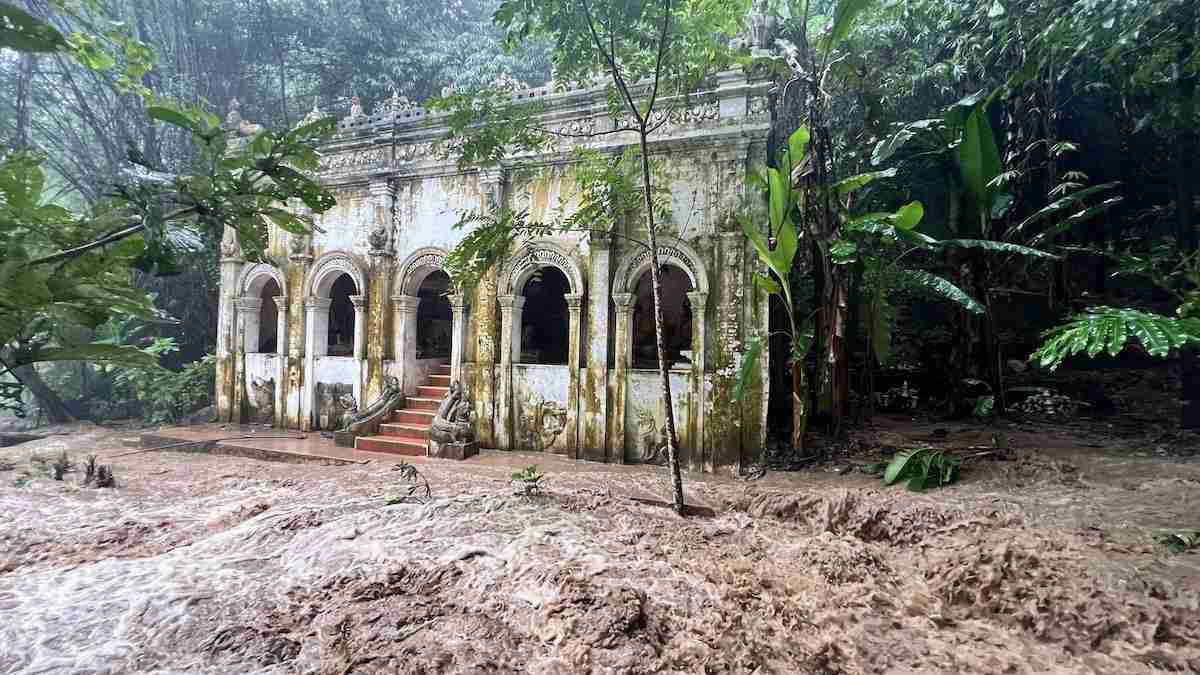
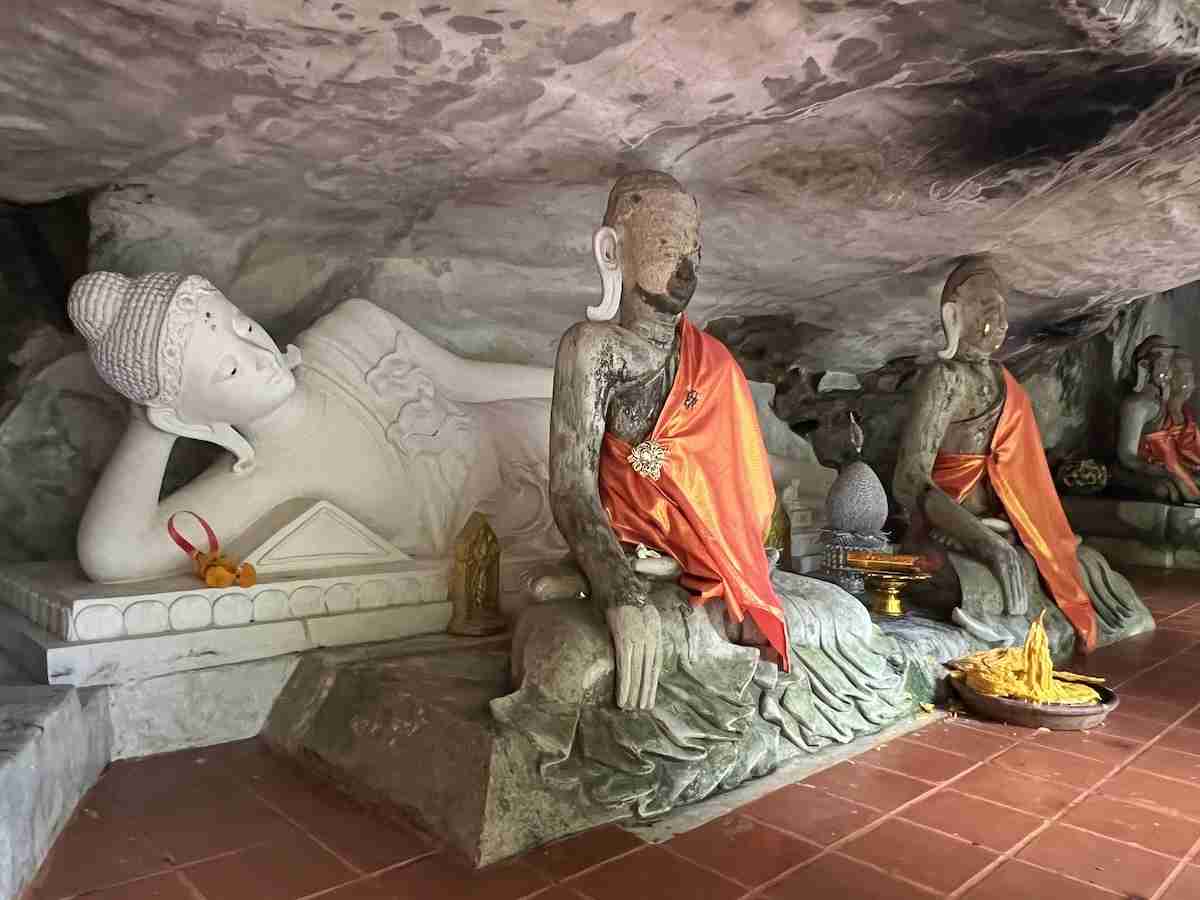
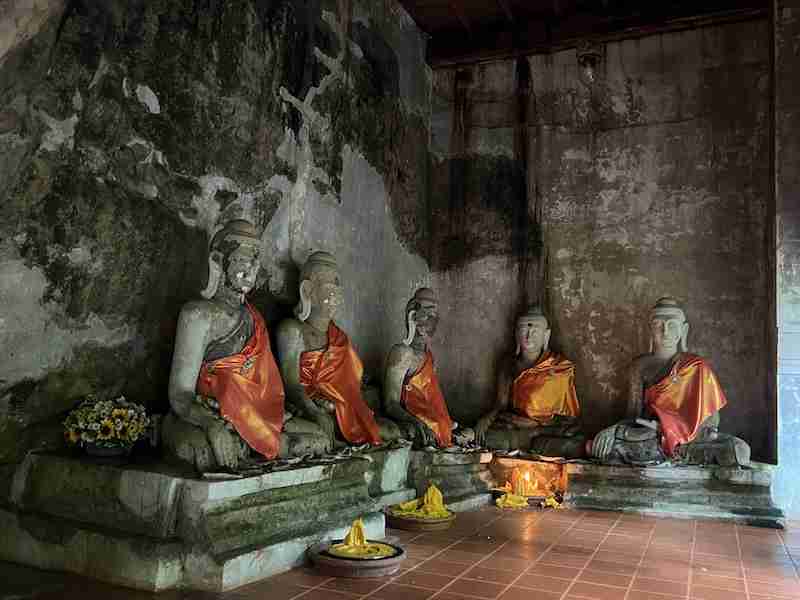
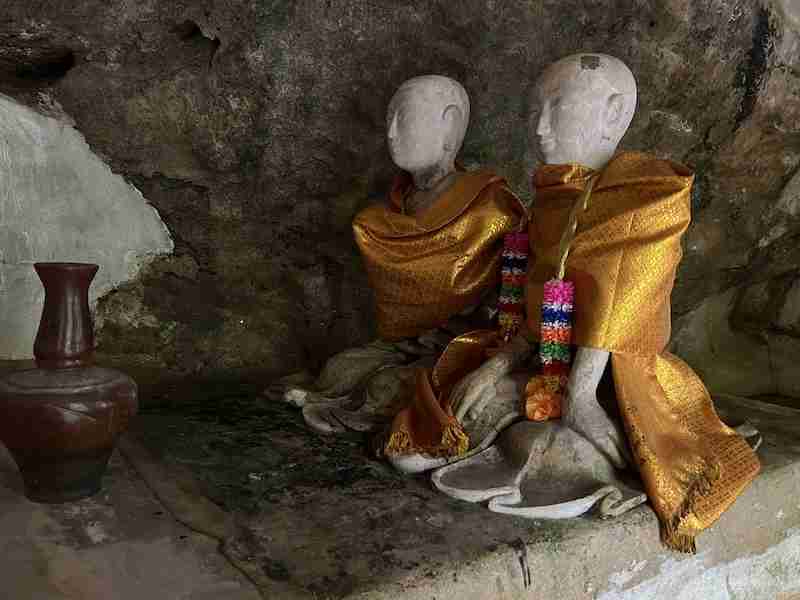
The Pagoda: Phra That Wat Pha Lat
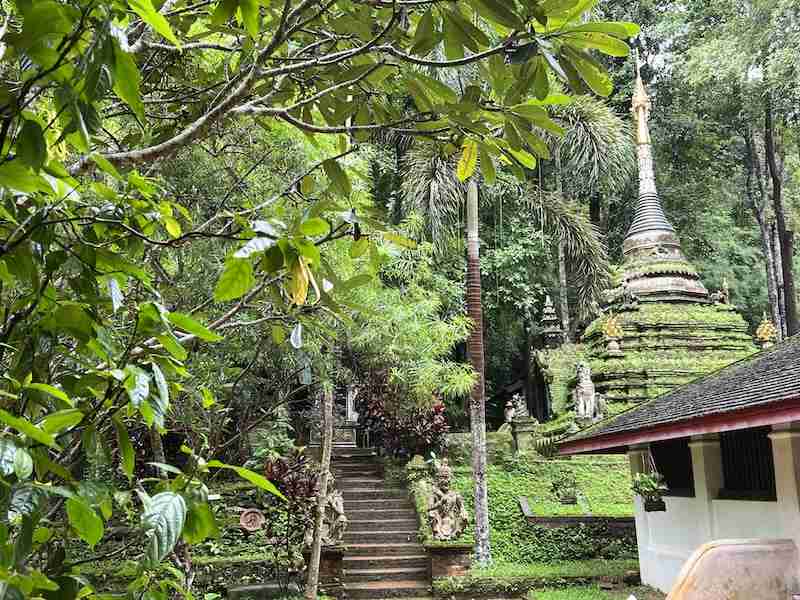
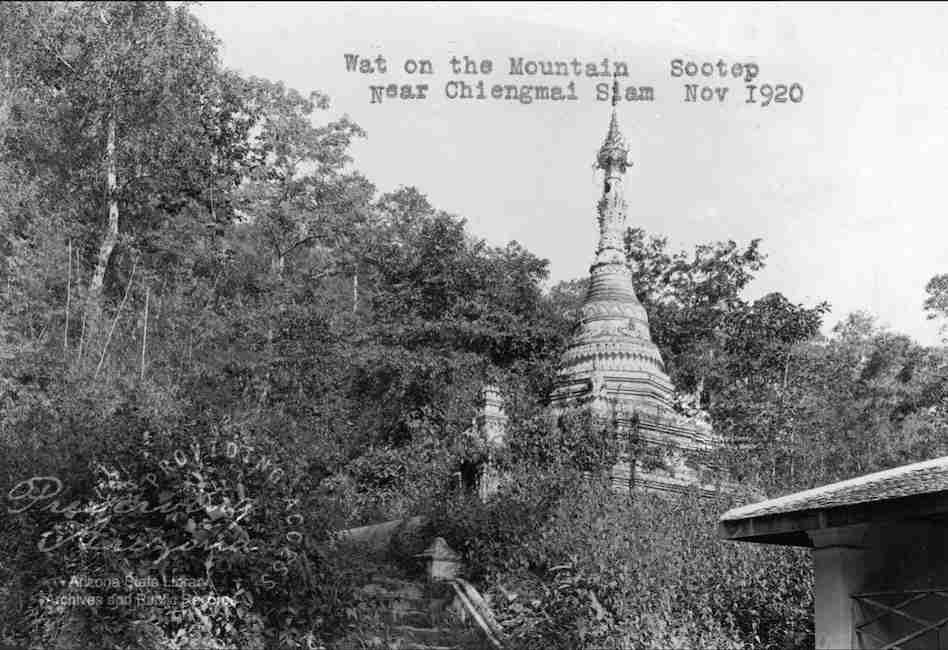
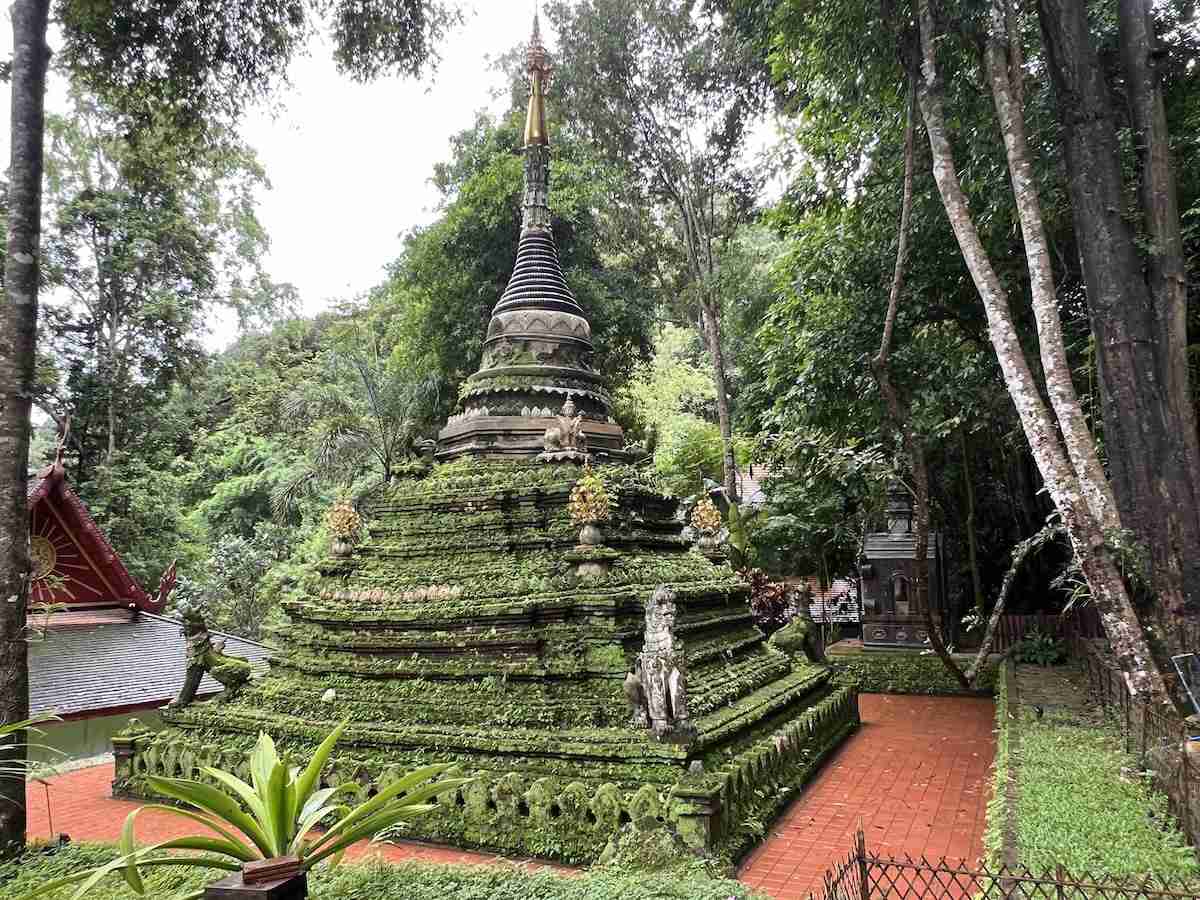
The Burmese-style pagoda at Wat Pha Lat was most likely constructed between 1898 and 1916. Film footage of the visit of King Prajadhipok, Rama VII and Queen Rambai Barni in January 1927 (1926 in the traditional calendar) shows that the pagoda had sustained damage. A picture from the archive of George W.P.Hunt, taken in November 1920, shows the pagoda still intact.
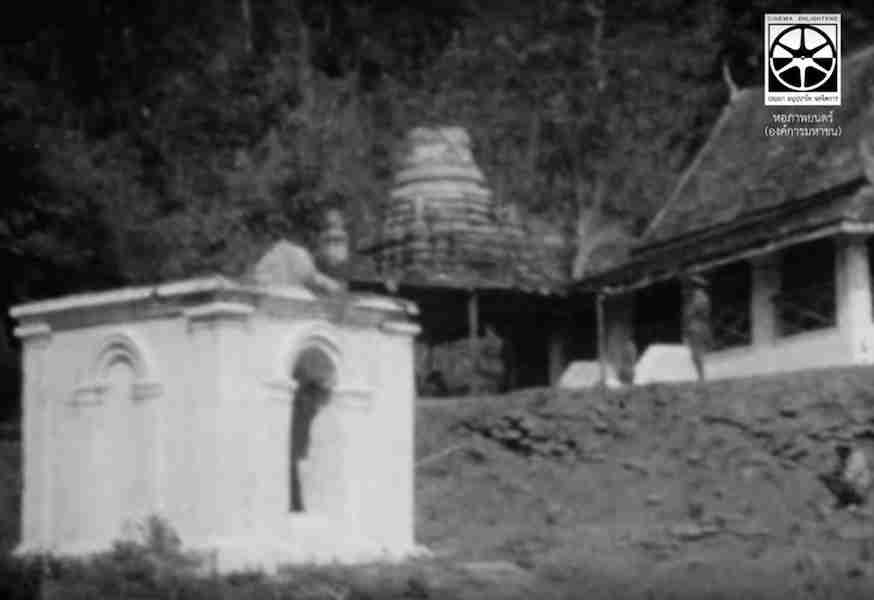
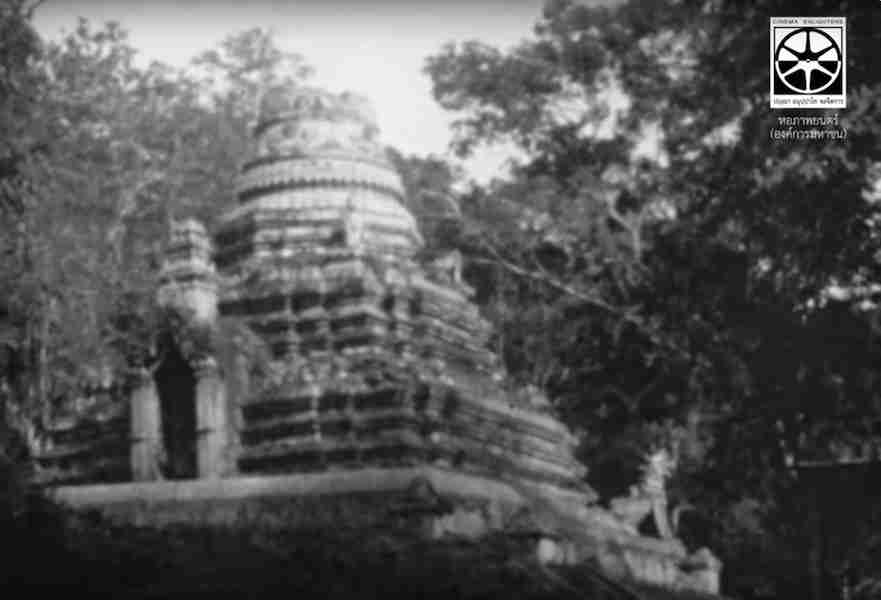
A powerful magnitude 6.7 earthquake struck near Langkho Township, about 34 km from the Thai–Burma (Myanmar) border, on 2 May 1922 at 11:10 GMT. The epicentre was likely around 250 km from Chiang Mai. It is possible that this earthquake contributed to the partial collapse of the pagoda at Wat Pha Lat, as no more plausible cause comes to mind.
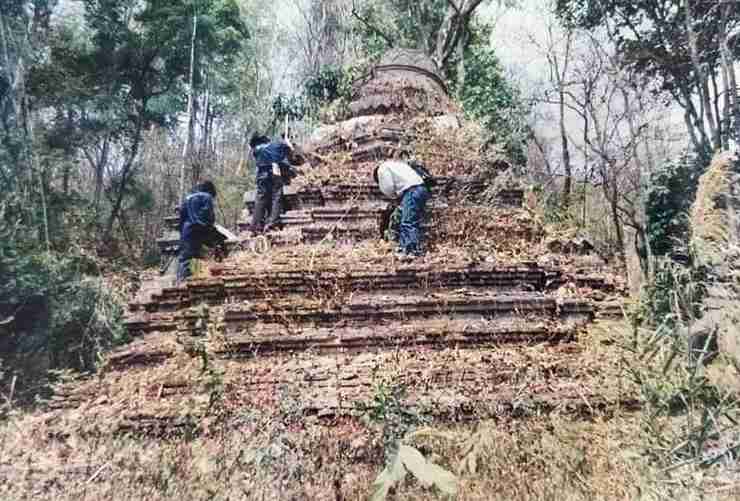
In 1993 staff of the Fine Arts Department visited the site and took pictures. They show the pagoda still in ruined state. It is unlikely that any restoration of the pagoda took place between 1927 and 1993. That means that all photos that show the undamaged pagoda have been taken before 1927. According to my information, the Fine Arts Department undertook the first restoration of the pagoda in 2001, a process that was completed in 2021.
What caused the demise of Wat Pha Lat?
Luang Yonakarn Phichit passed away in 1927. He was responsible for the restoration and construction of many Buddhist temples in Northern Thailand. His passing might have been a factor in the demise of Wat Pha Lat.
This might have been. In April 1935, followers of the monk Kruba Srivichai finished the construction of the road from the foot of the mountain to the base of the staircase that leads to the temple. It is plausible that after this, fewer people used the Monk’s Trail, which started the decline of Wat Pha Lat.
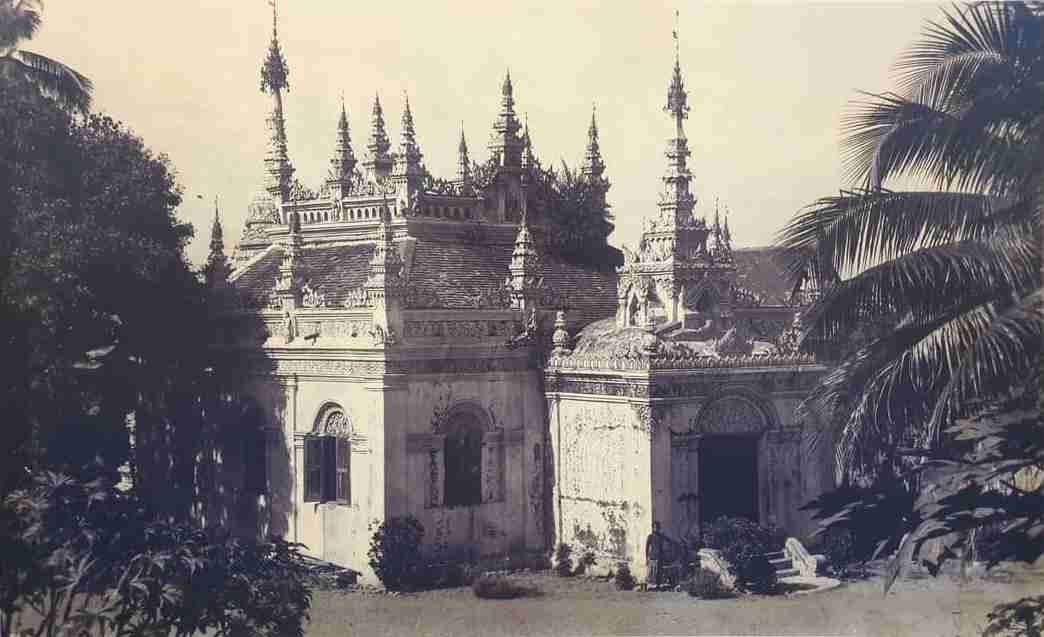
In the late 1950s authorities demolished the Burmese Wat Upakutman to make way for the Buddha Sathan building. This Burmese temple was located on the corner of Thapae and Charoenprathet roads, next to the “Thai” Wat Upakut. In his thesis “Ethnic Pluralism in the Northern Thai City of Chiangmai”, Michael Vatikiotis remarked that there was no one taking care of the temple. Did diminished interest of the Burmese community in its temples also had consequences for Wat Pha Lat?
Visiting Wat Pha Lat
According to a sign at Wat Pha Lat, the temple is open every day between 0700 and 1730. The temple is a functioning monastery so modest clothing is required (shoulders and knees covered) avoid being loud. There is no entrance fee but donations are highly appreciated. Wat Pha Lat is at its most beautiful and quiet in the early morning or the late afternoon. The forest is at its most stunning in the wet season when the forest comes to life.
Timeline of history of the Temple
Below is a timeline of the history of the temple. It is incomplete. I will update this timeline when I obtain new information.
- 1383 – Foundation of Wat Phra That Doi Suthep. Shortly after this, the foundation of a temple or sala probably took place at the current location of Wat Pha Lat.
- 1886 – British diplomat Ernest Satow walks the Monk’s Trail to Wat Phra That Doi Suthep
- 1886 – 1898 – During this period the construction of the Ho Prachao Rim Nam Tok, the water well, the assembly hall and a sala (now the meditation hall) probably took place
- 1898 – Minister of Interior Prince Damrong Rajanubhab visits Wat Pha Lat
- 1898 – 1916 – During this period the construction of the pagoda probably took place
- 1909 – Princes Dara Rasmi visits Wat Pha Lat
- 1916 – Prince Bhanurangsi Savangwongse visits Wat Pha Lat
- 1927 – King Prajadiphok (Rama VII) and Queen Rambai Barni visit Wat Pha Lat. Luang Yonakarn Phichit aka Mong Panyo passes away
- 1927 – 1993 The “dark period”. I have no information about what happened with the temple and didn’t find any photos from this period
- 1935 – Opening of the road to Wat Phra That Doi Suthep, constructed by followers of Kruba Srivichai, the “monk engineer” and patron saint of Lanna
- 1993 – A team of the Chiang Mai office of the Fine Arts Department visits Wat Pha Lat and took photos
- 2001 – First restoration of the pagoda Phra That Wat Pha Lat
- 2016 – a team of the Chiang Mai office of the Fine Arts Department visits Wat Pha Lat to prepare the reconstruction of the Ho Phra Chao Rim Nam Tok
- 2019 – Completion of the reconstruction of the Ho Phra Chao Rim Nam Tok
- 2021 – Completion of the restoration of the pagoda Phra That Wat Pha Lat
The location of Wat Pha Lat
References for this article
Sarassawadee Ongsakul, History of Lanna, Chiang Mai, 2005
Michael Freeman, Lanna, Thailand’s Northern Kingdom, Bangkok, 2001
Hans Penth, A brief history of Lanna, Chiang Mai, 2000
The Bangkok Post
The Wat Ket Museum at Wat Ket Karaam
เจ้าอาวาสวัดผาลาด ร้องสำนักศิลปกรเชียงใหม่ เร่งตรวจสอบความเสียหายบริเวณจุดหอชมศิลป์, article In Chiang Mai News, October 19, 2017
“หอพระหน้าผา” อายุหลายร้อยปีที่ “วัดผาลาด” แตกร้าวหนักหลังฝนกระหน่ำดอยสุเทพจนดินอุ้มน้ำมาก-ศิลปากรเร่งสำรวจบูรณะ, article in MGRonline, October 5, 2016
Kreangkrai Kirdsiri and Isarachai Buranaut, สถาปตยกรรมหอพระเจานํ้าตกผาลาด วัดผาลาดสกทาคามีเชิงดอยสุเทพ จังหวัดเชียงใหม,
“วัดผาลาด” ความสวยงามท่ามกลางธรรมชาติ, article in Chiang Mai News, October 19, 2017
Michael R.J.Vatikiotis, Ethnic Pluralism in the Northern Thai City of Chiangmai, 1984
Numerous Facebook pages such as:
ล้านนาประเทศ
Wat Pha Lat in tours of Chiang Mai a la Carte


